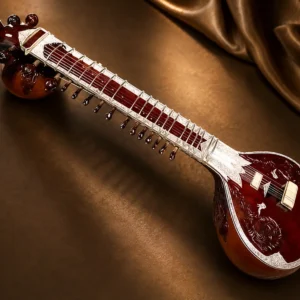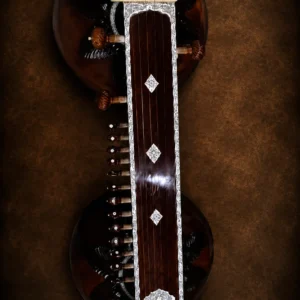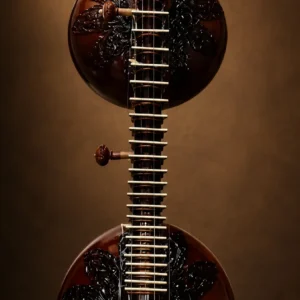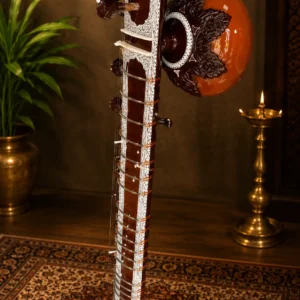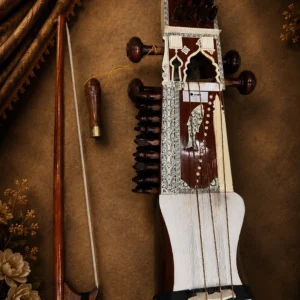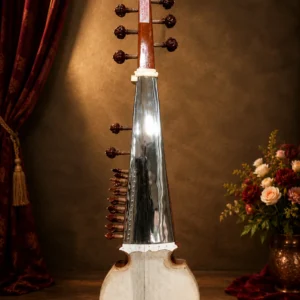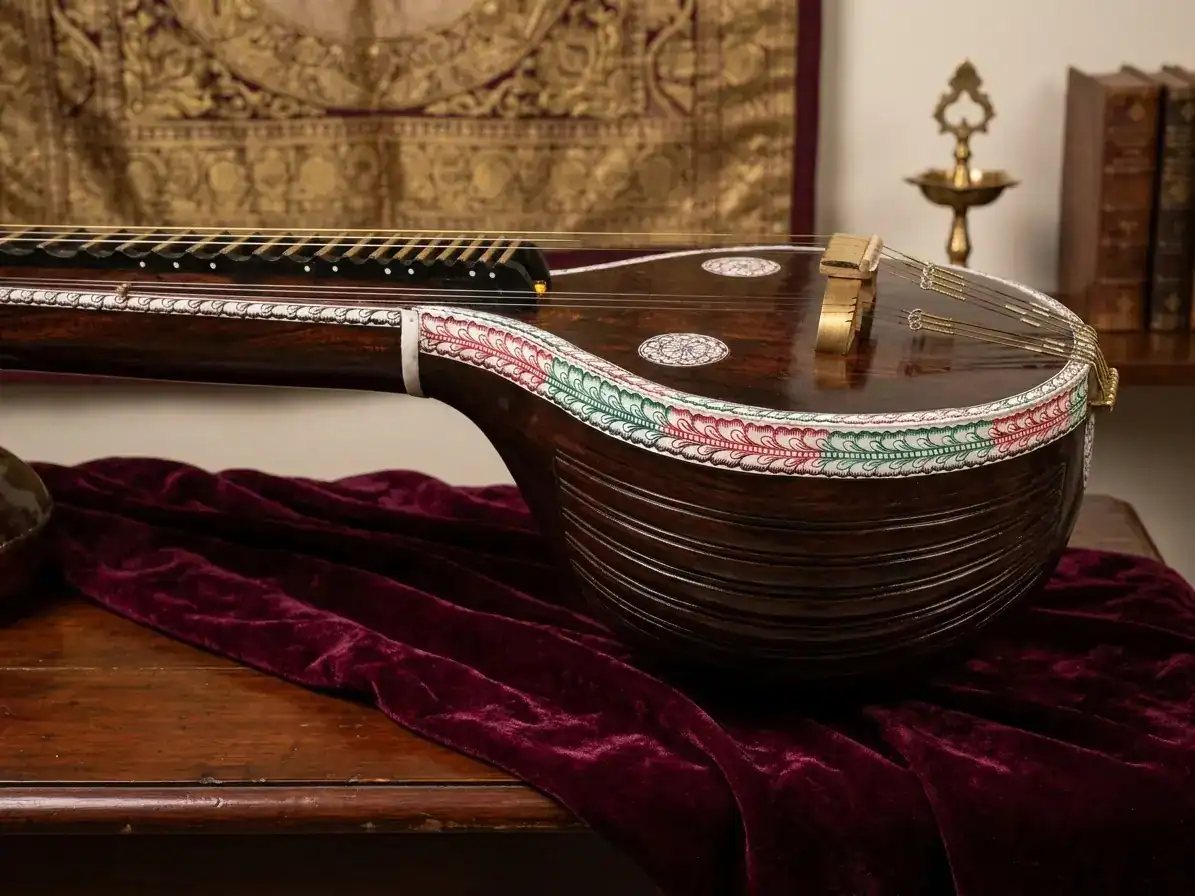
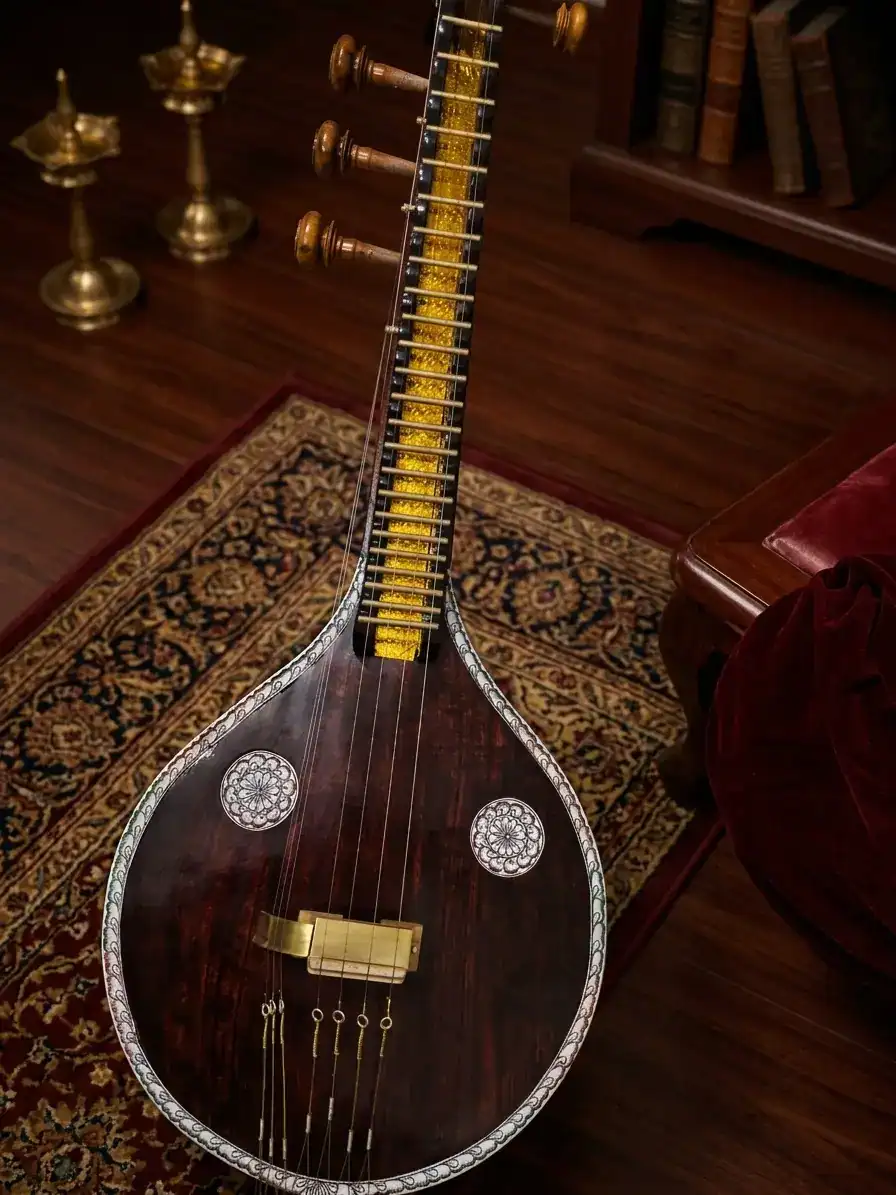
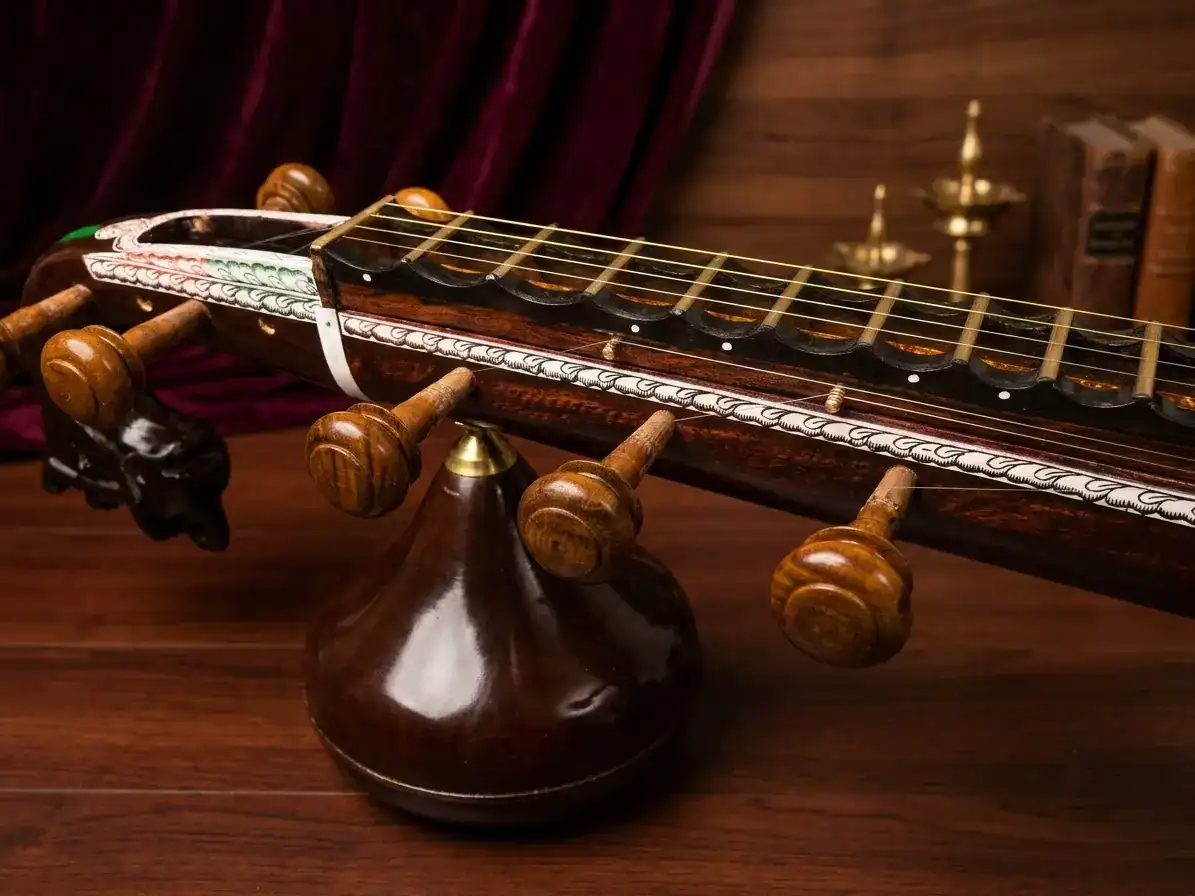
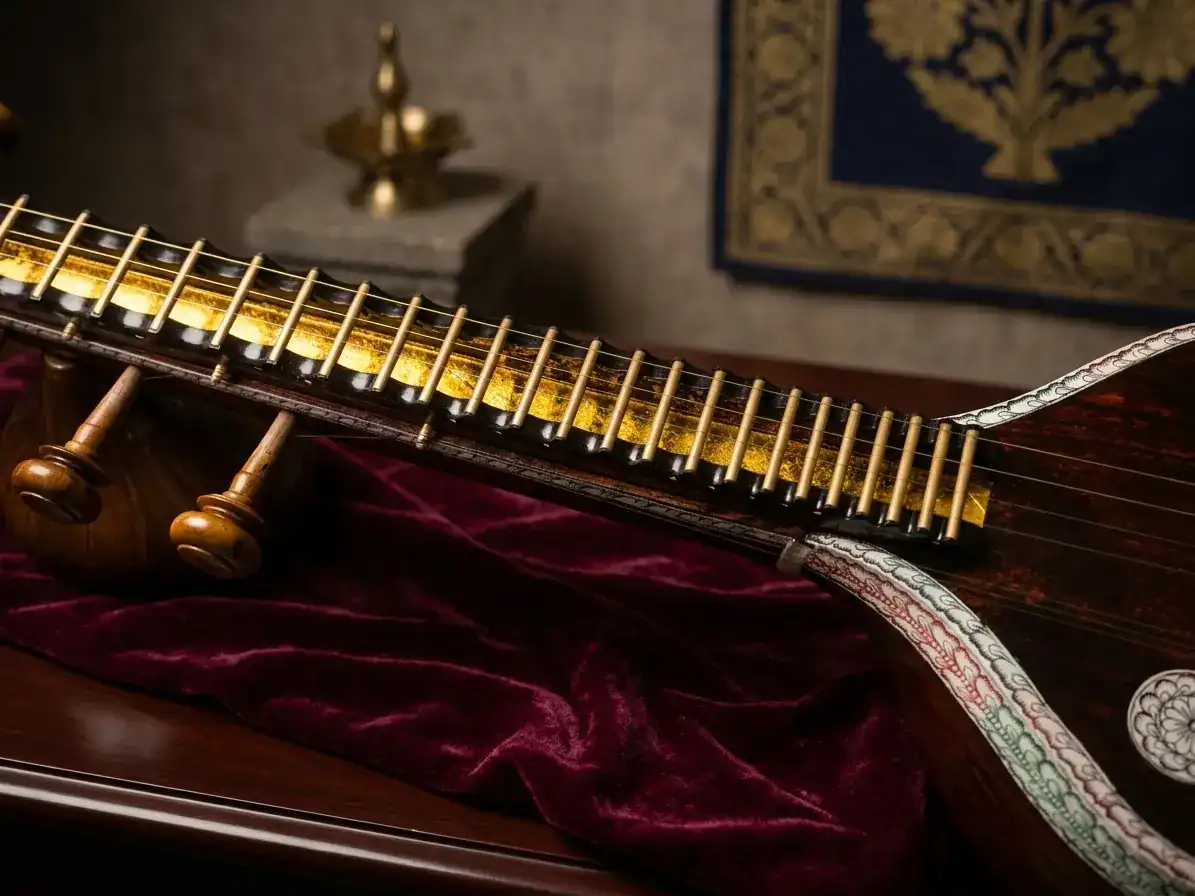
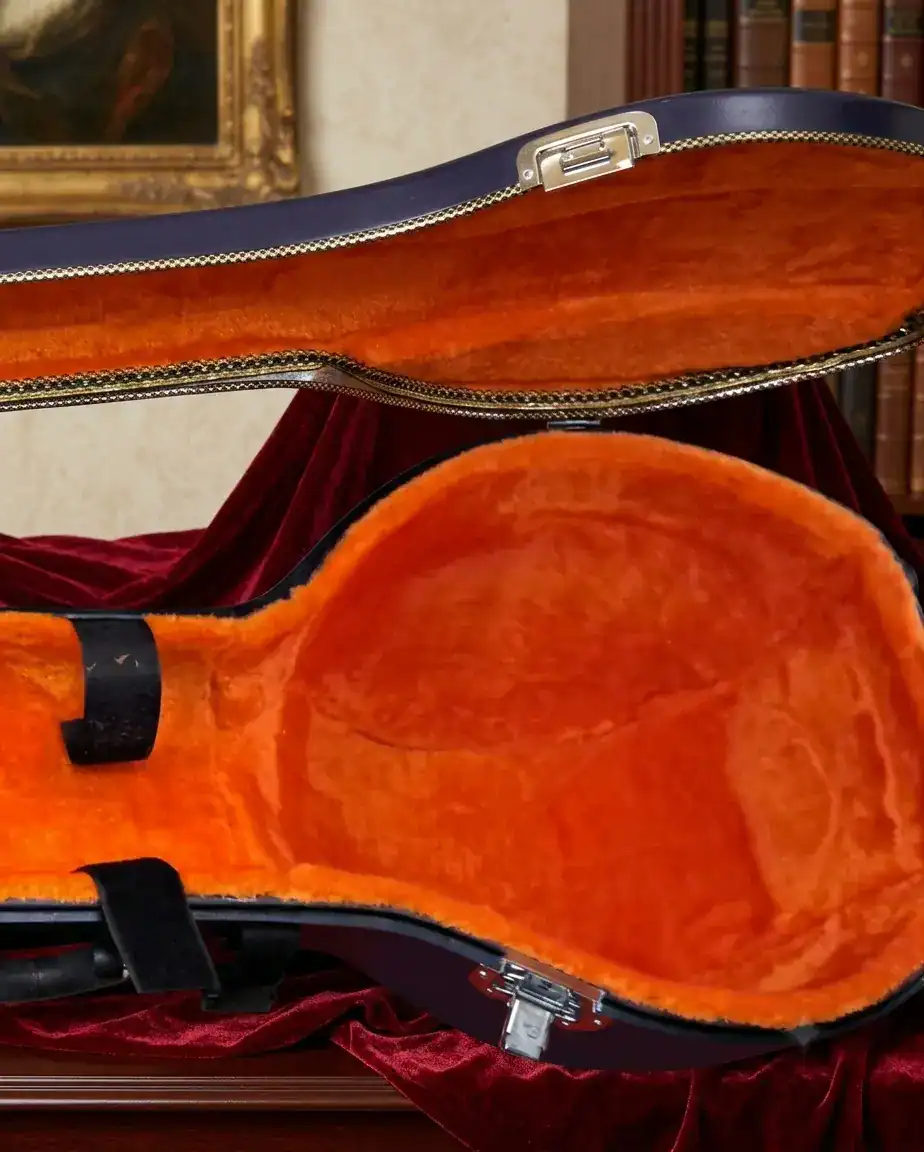
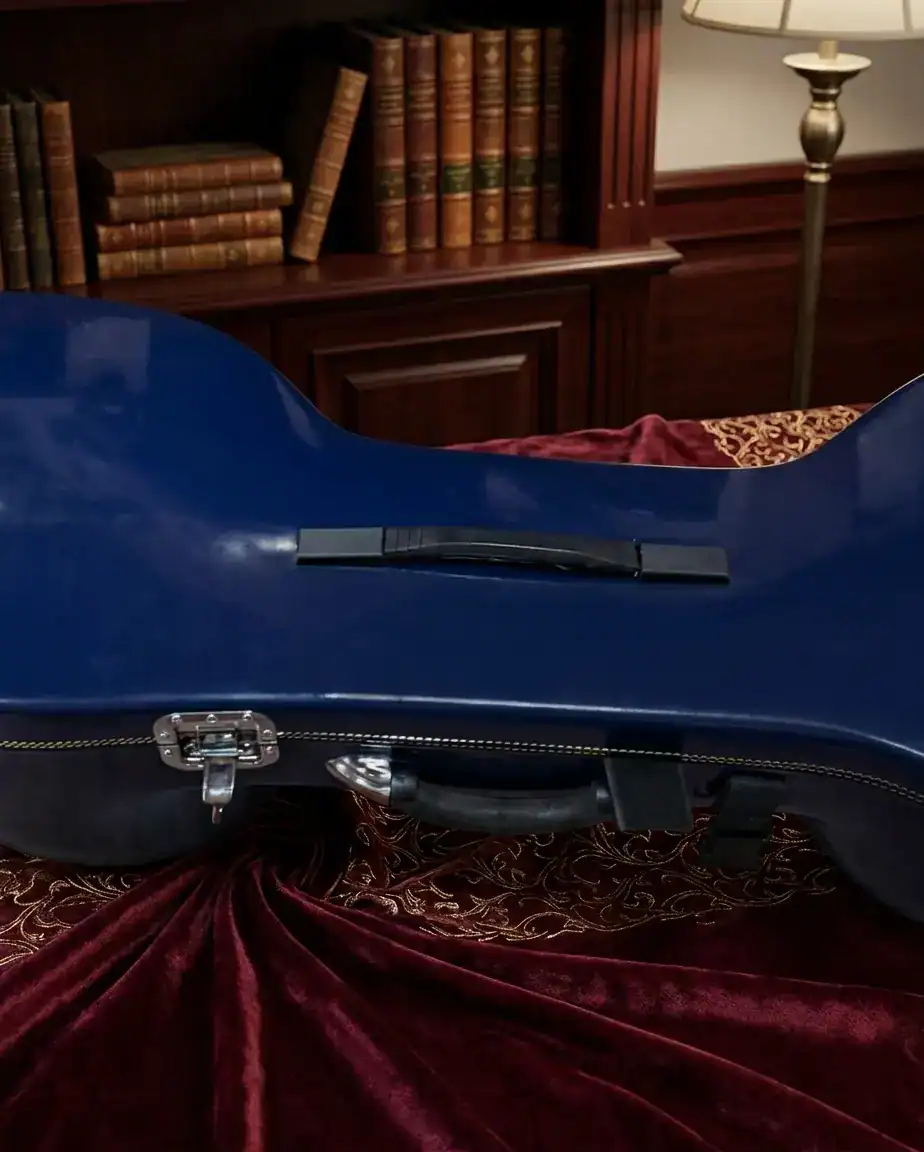
Saraswati Veena (Half Fiber Body) Features:
Good sound quality, big in size. Shipping Free within India.
Delivery Time: 35-45 Working Days after Successful Payment.
Warranty: 1 Year Manufacturing Warranty
In The Box: Saraswati Veena, Mizrub, Cloth Cover, Fibre Case
For More information SMS 2400F Name Email Country and Send to +919830066661
N.B: All prices are inclusive of Shipping, Packing, Tax and Insurance (within India). No hidden costs.
International Customers (shipping globally): Please switch the currency to US$, as the product will be Upgraded for International Customers. International Freight and International Insurance will be added extra.
Please read our Terms & Conditions, Privacy Policy and Shipping Policy.
History (Wikipedia):
From where we get Saraswati Veena- Small history below:
Our knowledge about the instrument is from Wikipedia. As per Wikipedia, we shared this small history to let our customers know about the instrument history. The veena has a recorded history that dates back to approximately 1700 BCE. In ancient times, people knew the tone vibrating from the hunter’s bow string when he shot an arrow as the Vil Yazh. Furthermore, the ancient Atharvaveda refers to the Jya ghosha (musical sound of the bow string). Eventually, the archer’s bow paved the way for the musical bow. Consequently, craftsmen used twisted bark, strands of grass and grass root, vegetable fibre, and animal gut to create the first strings.
The veena instruments developed much like a tree. Consequently, they branched out into instruments as diverse as the harp-like Akasa (a veena that people tied up in the tops of trees for the strings to vibrate from the currents of wind) and the Audumbari veena (played as an accompaniment by the wives of Vedic priests as they chanted during ceremonial Yajnas). Moreover, musicians ranged veenas from one string to one hundred and composed them of many different materials like eagle bone, bamboo, wood, and coconut shells. Interestingly, the yazh was an ancient harp-like instrument that musicians also considered a veena.
However, with the developments of the fretted veena instruments, the yazh quickly faded away. As the fretted veena allowed for the easy performance of ragas and the myriad subtle nuances and pitch oscillations in the gamakas prevalent in the Indian musical system. Ultimately, it was not until the great Indian Carnatic music composer and Saraswati veena player Muthuswami Dikshitar that musicians began to popularize it as played horizontally, this provides a basic history of this instrument.